-
tel:
+86 13773014250 -
email:
jinjiang@kinkou.cn


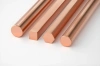
Liquid Cooling Porous Copper Bar
The Liquid Cooling Porous Copper Bar for AI Server is a high-performance thermal management component specifically designed for heat dissipation.

description1
Zipper closure
1/4 zip athletic pullovers for men. Stretchy, lightweight, fast-drying
fabric for superior performance.
REGULAR FIT - US standard sizes. An athletic fit that sits close to the body
for a wide range of motion, designed for optimal performance and all day
comfort.
FEATURES - Quarter zip closure;Thumbholes on long sleeves to keep them in
place during workout
Liquid Cooling Porous Copper Bar for AI server
Core Structure and Material Advantages
Made of high-purity copper (purity ≥ 99.9%), the porous copper bar is processed through advanced extrusion to form a uniform, three-dimensional porous structure. The porous structure features high porosity (30%-60%) and interconnected pores, which not only retain the inherent high thermal conductivity of copper (thermal conductivity ≥ 380 W/(m·K)) but also maximize the contact area between the copper bar and the cooling liquid.
Application Scenarios
This porous copper bar is mainly used in liquid cooling systems of high-speed optical modules, including but not limited to:
-
Data Center Optical Communication Equipment: Applied to optical modules in server cabinets, switches, and optical transceivers, solving the heat dissipation problem of high-power, high-speed optical modules in dense deployment scenarios.
-
5G/6G Base Station Equipment: Used in optical modules of base station transceivers, adapting to the high-temperature working environment of outdoor base stations and ensuring stable signal transmission.
-
High-Performance Computing (HPC): Applied to optical modules in supercomputers and high-performance servers, providing efficient thermal management support for high-speed data transmission and computing.
-
Industrial Optical Equipment: Used in optical modules for industrial control, aerospace, and other fields, where high reliability and efficient heat dissipation are required.
Related Products


_美图抠图07-08-2025.webp?x-oss-process=image/resize,w_100/quality,q_100)

_美图抠图07-08-2025.webp?x-oss-process=image/resize,w_100/quality,q_100)




Contact US
Product Information
Quantity
Unit
Piece
Support order samples, customization, wholesale direct, and complete payment. If the product you look for does not have corresponding customized content, pls fill out the form below to contact us, and we will reply ASAP.